.jpg)
22 Apr 2026
Earth Day 2026 | By: Kavya Joshi
Think about the last time you paid an energy bill. Or stood in a warm kitchen on a cold morning, kettle boiling, heating on, not thinking about any of it. That unremarkable comfort, the ability to power a home without a second thought, is so ordinary that most of us never stop to consider what it depends on, or where it comes from. This Earth Day, the theme is Our Power, Our Planet, a phrase carrying two meanings folded into one. Read it one way, and it is about energy: the electricity we generate, the gas we burn, the choices we make about how to keep warm and keep the lights on. Read it another way, and it is about something bigger: the collective responsibility each of us carries toward our planet, our home. The phrase holds both meanings at once, and the tension between them is precisely where the most important conversation in energy right now is happening. At Translating Energy, that is the conversation we are part of every day. And this year, it feels more urgent than ever.
To understand where we are now, it helps to remember where we have been before. In 1973, OPEC's oil embargo sent crude prices quadrupling almost overnight, throwing Britain into crisis. Petrol queues stretched around the block. The three-day working week was introduced. In the chaos, the government did something that, in hindsight, looks remarkably forward-thinking: it began investing seriously in renewable energy, treating it as what Whitehall papers of the time described, according to University of Glasgow research, as an "insurance technology." Between 1974 and 1978, wave power was genuinely regarded as a serious part of Britain's energy future. Wind research followed. There was real momentum, real money, real intent.
And then oil prices fell. And the momentum evaporated almost as quickly as it had built. Investigations into geothermal power prompted by the 1973 crisis were quietly abandoned as fuel prices softened. The wave energy programme was shut down by the early 1980s, amid what researchers describe as dwindling government support. North Sea oil and gas had arrived, and with it the comforting logic of short-term abundance. Why invest in expensive, uncertain technologies when cheap fuel was flowing domestically? It was a perfectly rational short-term calculation. It was also, as it turns out, a very expensive long-term mistake.
The same pattern repeated itself after Russia's invasion of Ukraine in 2022, which sent European gas prices to levels that hadn't been seen in decades and triggered a cost-of-living shock that millions of households are still recovering from. The response, again, was a rush of clean energy ambition: faster permitting, bigger auction targets, urgent conversations about energy independence. And while that ambition has genuinely delivered results this time around, the underlying lesson has taken a very long time to stick. We have now lived through this story often enough to know how it goes. A crisis hits. Fossil fuel dependence is suddenly, painfully visible. Renewables get a moment in the sun. Then prices ease, attention drifts, and the structural change that was needed gets pushed to the back of the queue for another decade.
What is different in 2026 is that the clean energy transition has finally crossed a threshold where the economics no longer require a crisis to justify it. According to data tracked by Carbon Brief, the cost of offshore wind has fallen by approximately 70% since 2015, making it competitive with or cheaper than gas-fired generation without any subsidy at all. That is not a future projection. That is the current price of electricity from wind turbines turning in the North Sea right now. And those turbines are doing an enormous amount of work. According to analysts at MSS Infrastructure, over 12,000 of them are generating around 30% of all UK electricity, with the government targeting 60 GW of offshore wind capacity by 2030. According to NESO's own monthly energy reports, zero-carbon sources delivered 61% of Britain's electricity in January 2026, climbing to 63% in February, with wind generating over a third of all electricity in both months and holding its place as the country's single largest source of power. To put that in perspective, for months on end, the wind coming off British coastlines has been outworking every gas plant, every nuclear station, and every other source on the grid combined. That is not a government ambition or a forecast. It is what is already happening.
The numbers from March 2026, as documented by Carbon Brief, tell a particularly vivid story. Wind and solar together generated a record 11 terawatt hours of electricity that month, up 28% on the same time the previous year. That record output meant Britain did not need to import around 21 terawatt hours of gas, the rough equivalent of 18 fully loaded LNG tankers that never needed to be called in. The cost avoided? Close to one billion pounds, in a single month. Meanwhile, as Ember's clean energy research shows, the new wind and solar capacity built since the last energy crisis is now saving Britain around seven million pounds every single day in gas purchases. There is something quietly satisfying about that figure. Every turbine that went up during the difficult years of high prices and public debate is now paying Britain back, day after day, regardless of what is happening in the rest of the world.
And a great deal is happening in the rest of the world right now. In late February 2026, conflict broke out involving Iran and a US-Israeli coalition, and one of its most immediate consequences was felt in a narrow strip of water called the Strait of Hormuz. Around 20% of the world's seaborne oil passes through it, along with significant volumes of liquefied natural gas. When shipping through the strait collapsed, the effects were felt at petrol stations, in supermarkets, and in household energy bills from Brighton to Belfast. As documented by the House of Commons Library, the average daily cost of gas-fired power generation in Britain jumped 42% in the four weeks following the start of the conflict. According to CNBC's oil market reporting, Brent crude prices surged more than 55% from late February to their peak. European gas benchmarks nearly doubled. The National Institute of Economic and Social Research now forecasts UK inflation breaching 5% before the end of the year. The Bank of England held interest rates in March. Financial markets no longer expect any cuts in 2026.
The human reality of those figures is worth spelling out plainly. Families already stretching budgets to cover rising mortgage costs and food bills are looking at higher energy prices again. Businesses with tight margins are absorbing fuel surcharges. The disruption in a region that millions of British people have no direct connection to has landed, quite literally, in their monthly outgoings. This is not a new story. As the Office for Budget Responsibility noted in its analysis of the 2022 energy shock, the 1970s oil crises saw crude prices rise four-fold, then fall, then almost triple again following the Iranian revolution in 1978, triggering a global recession in the early 1980s. The names and locations change. The mechanism is exactly the same: economies built on imported fossil fuels remain permanently exposed to disruptions they cannot control, cannot predict, and cannot easily absorb.
What makes 2026 meaningfully different from 1974 or 2022 is the degree to which Britain has actually built its way toward something better. Ember's analysis of the current situation shows that wind and solar generation in Britain was 52% higher in the four weeks after the conflict began than in the equivalent period in 2021, while gas generation fell 39%. The clean energy capacity that was built over the past five years could not be disrupted by events in the Persian Gulf. It just kept generating. Every wind turbine installed, every solar farm commissioned, every grid battery connected before this crisis arrived turned out to be a quiet act of national resilience. That is the case for speed, stated plainly: every year of delay on clean energy deployment is another year of exposure to exactly this kind of shock.
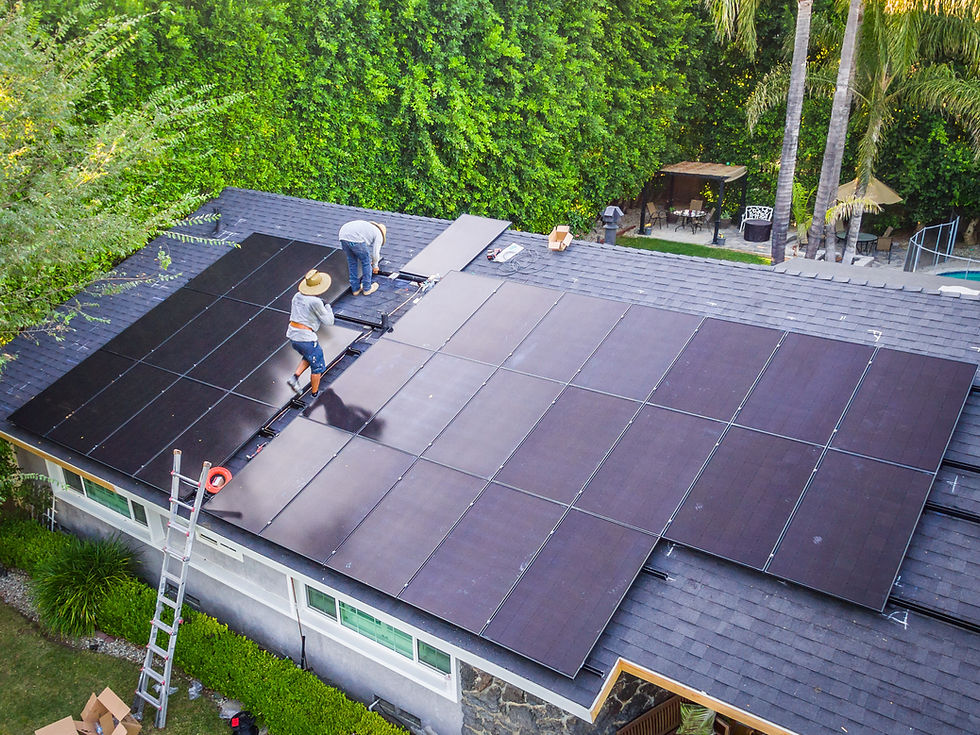
But the transition is not just something that happens at the level of government targets and offshore infrastructure projects. The Our Power, Our Planet theme of Earth Day 2026 is an explicit call to individuals and communities, and across Britain, that call is increasingly being answered in everyday life. According to MSS Infrastructure, over 1.3 million UK homes now have rooftop solar, quietly feeding surplus power back to the grid while cutting household bills. Heat pump adoption, thanks to government-based subsidies, is growing and becoming the default heating solution for most buildings and individual households. Smart meters and time-of-use tariffs are reshaping how people think about energy consumption in ways that would have seemed impractical even ten years ago. Electric vehicles, charged intelligently overnight when the grid is under less pressure, are beginning to function as a kind of distributed energy storage, with millions of car batteries playing a small but real role in stabilising a system that was designed for a world we are gradually leaving behind.
None of these changes are dramatic on their own. But they accumulate. They build habits, shift expectations, and create the kind of ground-level momentum that makes larger policy change possible. As Earth Day's own manifesto puts it, environmental progress is built through everyday action, and the UK's experience with clean energy is showing what that looks like in practice: not a single grand gesture, but a steady accumulation of choices made at every level, from the household to the national grid. The lesson Britain kept failing to act on in the past is finally starting to feel like it is being absorbed, not because the politics have shifted but because the economics, the security arguments, and the personal experience of millions of people are all pointing in the same direction at once.
This is where Translating Energy comes in, because none of this happens well without communication. The transition needs wind turbines, heat pumps, heat networks and solar panels, yes, but it also needs trust and understanding. It needs someone to take the mechanics of a Contract for Difference and make them legible to a community wondering whether a wind farm will actually benefit them. It needs someone to help a clean energy developer articulate their proposition clearly to investors still learning the language of the sector. It needs content that helps a household understand why switching to a heat pump makes financial sense, not just environmental sense. At Translating Energy, that is what we do: we translate the technical into the accessible, the complex into the compelling, and the data into the story. We work with energy companies, developers, investors, policymakers and communities to communicate the transition clearly and credibly, because a transition that is not understood is not trusted, and a transition that is not trusted does not move fast enough.
We have been here before, as a country and as a world. We have felt the pain of fossil fuel dependence, promised ourselves we would do something about it, and then quietly retreated when prices eased and the urgency faded. The question this Earth Day is whether this time is genuinely different. The economics say yes. The security arguments say yes. The evidence from Britain's own grid says yes. The households installing solar panels and the engineers commissioning new offshore wind farms say yes. The only thing left is to tell that story well enough, clearly enough, and to enough people that the lesson finally sticks.
That is a question Translating Energy is here to help answer.
_________________________________________________________________________________
Translating Energy is a specialist consultancy for the clean energy sector. We help energy companies, developers, investors and public bodies communicate the transition clearly, credibly and compellingly. Get in touch to find out how we can help tell your story.